
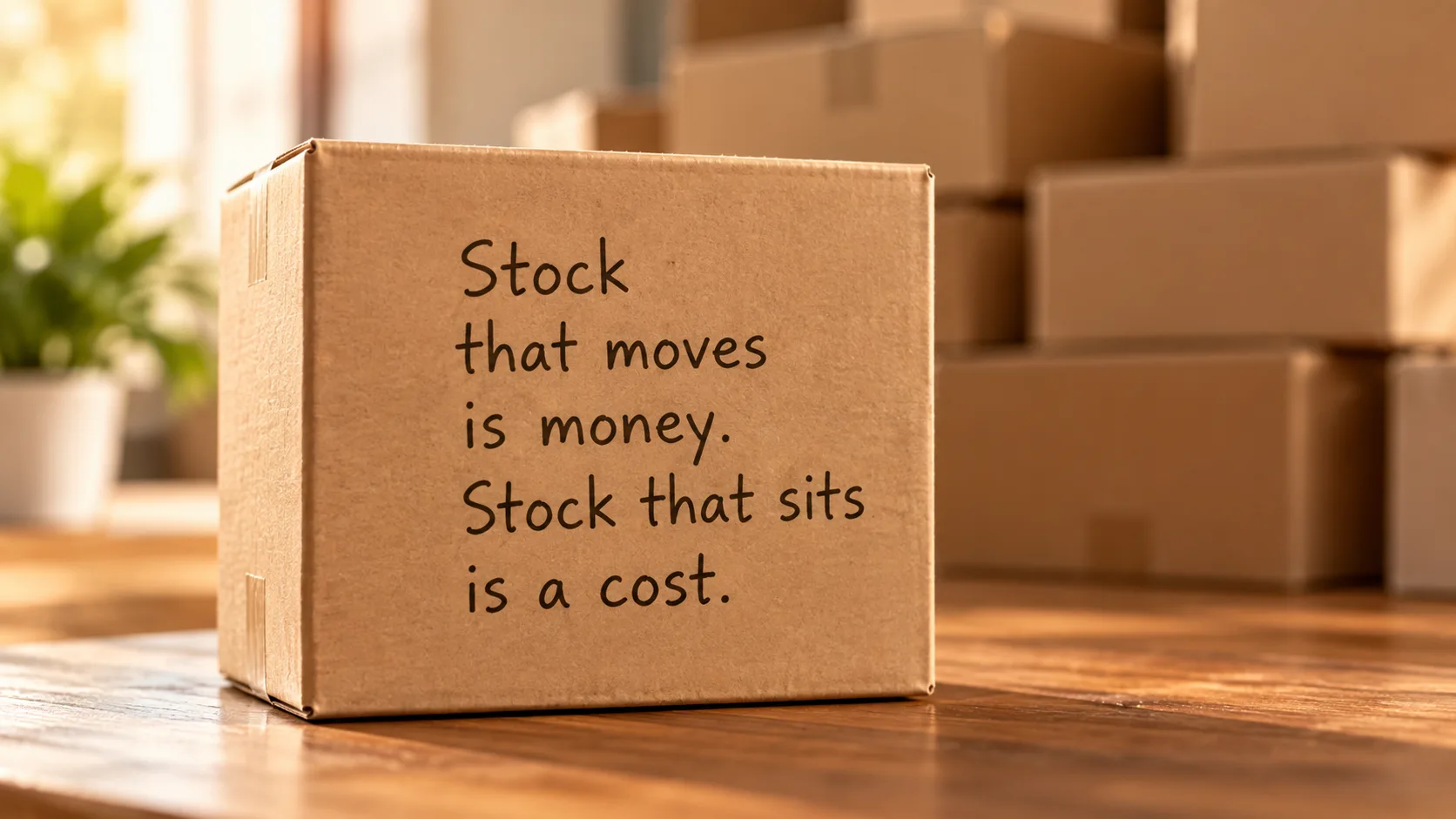
Stock on a shelf is cash that cannot yet pay rent, suppliers or wages. The purchase price is only part of its cost: storage, damage, expiry and the time spent counting it also matter.
Compare what you have with what customers actually buy. Identify items that move slowly, check their age and avoid replenishing them automatically. Seasonal products need a different plan from reliable everyday sellers.
Use regular stock counts and sales records to make smaller, better-timed purchasing decisions. Discuss order quantities and delivery frequency with suppliers. Protect availability for popular items while reducing money trapped in products that sit.